B.Sc., Ed. (***)
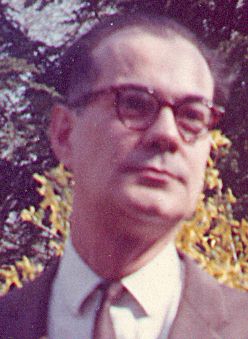
| James Benjamin Blish B.Sc., Ed. (***)
|
| Generation: | 10 |
| Born: | May 23rd, 1921 |
| Birthplace | East Orange, New Jersey, USA |
| Died: | July 30th, 1975, at about age 54 |
| Cause of death: | Cancer |
| Died at: | Henley-on-Thames, Harpsden, Oxfordshire (Oxon), England |
| Burial: | Internment, St. Cross Church Cemetery, Oxford, Oxfordshire (Oxon), England |
| Father: | Asa Rhodes Blish, (***) |
| Mother: | Dorothea (Schneewind) Blish |
| Occupation(s): | Science fiction author, reader, editor, critic, public relations counsel, musician, poet |
| Marriages: | • Judith Ann (Lawrence) Blish
• Mildred Virginia (Kidd) Blish |
| Children: | Asa Benjamin Blish Dorothea Elisabeth (Blish) Genly, RN, CNM, B.A. Lit., M.S. Nursing Master Charles Benjamin (Blish) Williams, 5th dan |
|
James Benjamin Blish achieved fame all over the world as one of the "founding fathers" of the Science Fiction community. He helped to found the Science Fiction Writers of America (SFWA) and was published in many languages. During his career he received Science Fiction's top award, the Hugo Award in 1959, and was awarded the Hugo again posthumously, well as many other lesser honors during and after his lifetime. After his death, an award for criticism was created in his name. The first winner of the James Blish award was Brian Aldiss, in 1977. On July 5th, 2002, James Blish was posthumously inducted into the Science Fiction and Fantasy Hall of Fame. He served in the US Army as a foot-soldier, and in the Civil Air Patrol as a pilot. One of his later stories, Tomb Tapper, 1956, featured the Civil Air Patrol as a plot element. For a truly detailed look at this Blish family member, the following work is recommended:
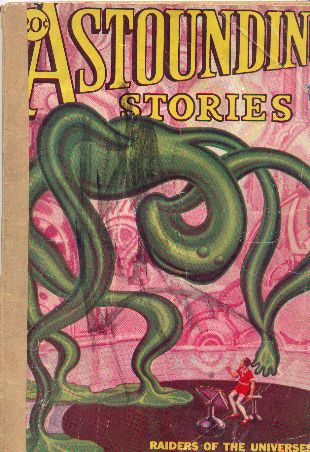
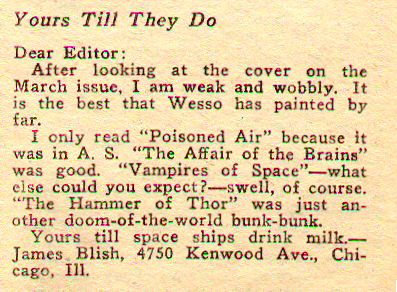
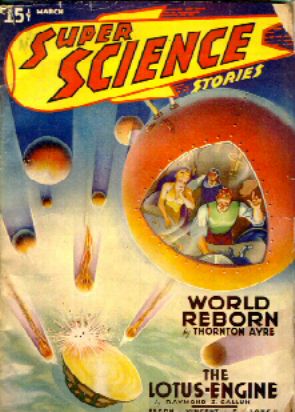
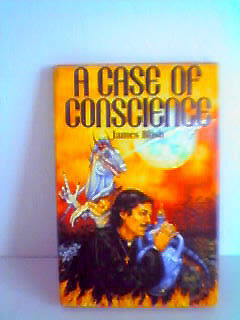
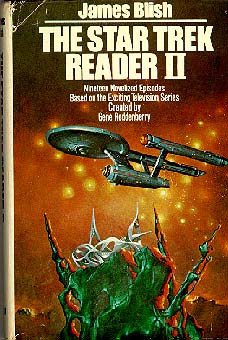
Here are some photos of the science fiction titles of James Benjamin Blish: Here is James Blish's very first appearance in print in the letters section of Astounding Stories, at the tender age of 11 years old. This appeared in the readers comments section for the September 1932 issue.
Here is an interesting letter he wrote to Astonishing Stories in 1940:
Tom Purdom shares the following fascinating anecdote:
Some Interesting Tidbits
The following is the obituary that appeared in The New York Times on Thursday, July 31, 1975. It suffers from the typical shallowness of newspaper reporting, and carries some rather blatant errors for an obituary (for instance, it notes that his son Benjamin survived him, but neglects to mention his daughter, Elisabeth, by the same marriage two years previous to the son, and states that he had "written" Star Trek when in fact he novelized Star Trek scripts, with one major exception.) Even so, the mention in the paper is another confirming indication that his life, and his death, were of considerable note to society at large:
|
James Benjamin Blish |
|
1899-1923 6th Cholera pandemic 1910-1936 Reign of King George V (Windsor) 1918-1933 Prohibition 1920-1929 Roaring 20s 1921-1924 Warren G Harding president of US 1922 Insulin made available to diabetics 1925 Scopes trial on Evolutionary Theory 1925-1928 Calvin Coolidge president of US 1926 Sound in Movies 1927 Holland Tunnel opens (New York City) 1927 1st transAtlantic solo flight - Lindbergh 1928 Television 1928 Geiger Counter 1928 Penicillin discovered by Sir Alexander Fleming 1928 Video Recordings 1929 Stock Market Crash 1929-1939 Great Depression 1929-1932 Herbert Hoover president of US 1930 Pluto Discovered 1931-1933 Chinese-Japanese war (2) 1933-1945 Franklin D Roosevelt president of US 1933 Armstrong invents FM modulation 1933 Soviet communist party purge 1933 Radio Astronomy 1934 Longshoremans strike - 35,000 on strike for 83 days 1935 Dustbowl 1935-1936 Abyssinian war 1936 Spanish Civil War 1936 Helicopter 1936-1952 Reign of King George VI (Windsor) 1936 Reign of King Edward VIII (Windsor) 1937-1945 Chinese-Japanese war (3) 1937 Nylon (by DuPont) 1937-1938 Nanjing Massacre (the Rape of Nanking) 1938 Germany annexes Austria 1939-1945 World War II 1939 Digital Computer 1939 Aircraft Jet Engine invented (by Ohain) 1940 Color Television 1940 1st black general in US army 1941-1945 Manhattan Project 1942 Nuclear Reactor 1942 Magnetic Recording Tape 1945 Hypertext 1945 United Nations formed 1945 US drops the bomb on Hiroshima and Nagasaki 1945-1952 Harry S Truman president of US 1946 The Bikini 1946-1989 The Cold War 1947 Transistor 1947 India and Pakistan emerge from ex-British India 1947 UN partitions Palestine to Jewish and Arab sections 1948 33 1/3 rpm musical recordings 1948 NATO formed 1948 Israel inaugurated as state 1948 Arabs attack Israel on the day it is inaugurated 1948-1955 Multiple polio epidemics in the USA 1949 Apartheid policy in South Africa 1949 Soviets detonate first nuclear bomb 1949 45 rpm musical recordings 1950-1954 McCarthyism 1950-1953 Korean War 1950 World pop. est. at 2.4 billion 1950 Bunche 1st black to win Nobel Peace Prize 1951 Electricity from Atomic Power 1952 1st Thermonuclear Device Detonated 1952-2022 Reign of Queen Elizabeth II of England 1953-1960 Dwight D Eisenhower president of US 1954 Racial segregation in schools ruled unconstitutional 1954 Womans right to vote (UN Suffrage) 1955 Introduction of Salk Polio Vaccine 1955 Warsaw pact formed 1955 Invention of Velcro 1955 Fiber Optics (by Kapany) 1956 Ocean liner Andrea Doria collides with the Stockholm, sinks 1957 Sputnik Launched - 1st (artificial) satellite 1958 Stereo LP recordings come into usage 1958 FM Stereo Broadcasts 1958 Integrated Circuit 1958 US space agency (NASA) established 1958 Neural Network invented 1959 1st nuclear powered merchant vessel, Savannah 1959 Alaska enters the union - 49th 1959 Hawaii enters the union - 50th 1959 Hugo award for A Case of Conscience 1960 1st weather satellite (Tiros I) 1960 Laser 1960 World subsurface circumnavigation by US sub Triton 1960 Pantyhose 1961 1st US manned spaceflight - Alan Shephard 1961 First human in space - Yuri Gagarin 1961-1963 John F Kennedy president of US 1961-1989 Berlin Wall 1961-1991 7th Cholera Pandemic 1962-1965 Vatican II 1962 Cuban missile crisis 1963 Compact Cassette Recordings 1963 Pres. Kennedy Assassinated 1963 1st artificial heart 1963-1968 Lyndon B Johnson president of US 1963 Valentina Tereshkova is 1st woman in space 1964-1975 Vietnam War 1964 US civil rights bill 1965 Blacks riot in Watts neighborhood, Los Angeles 1965 1st spacewalks (US, USSR) 1965 SFWA founded 1966 1st soft landings on moon (US, USSR) 1966 8-track tape players 1967-1970 Nigerian civil war 1967 Six day war: Israel-Arabs 1967 Physicist John Wheeler coins the term Black Hole 1967 Marshall 1st black supreme court justice 1967 1st human heart transplant 1968 Martin Luther King assassinated 1968 Robert Kennedy assassinated 1968 Moves to England 1969 Moon Landing - Neil Armstrong and Buzz Aldrin 1969-1974 Richard M. Nixon president of US 1969 Woodstock Music Festival 1969 ARPANET begins (Internet's precursor) 1970 Nat. Guard murders 4 students at Kent State 1971 Pakistani civil war 1971 Intel ships 1st uProcessor: the 4004 1972 North Atlantic trash patch discovered 1972 8008 Microprocessor ships (Intel) 1973 The Internet begins 1973 October war (Israel-Arabic nations) 1973 Invention of the cellphone 1974 Pres. Nixon resigns in disgrace 1974-1976 Gerald Ford president of US 1974 8080 Microprocessor ships (Intel) 1974 6800 Microprocessor ships (Motorola) 1974 CP/M operating system released 1974 1802 CMOS Microprocessor ships (RCA) 1975 Byte Magazine, issue #1 - September 1975 Altair 8800a - the 1st home computer 1975 SWTPC 6800 computer 1975 IMSAI 8080 computer 1975 Ebola virus appears - 90% lethal 1975 6502 Microprocessor ships (MOS Technology) |